What grows on water that will not come back
The cropping pattern above an aquifer is a decision about how fast to spend it.
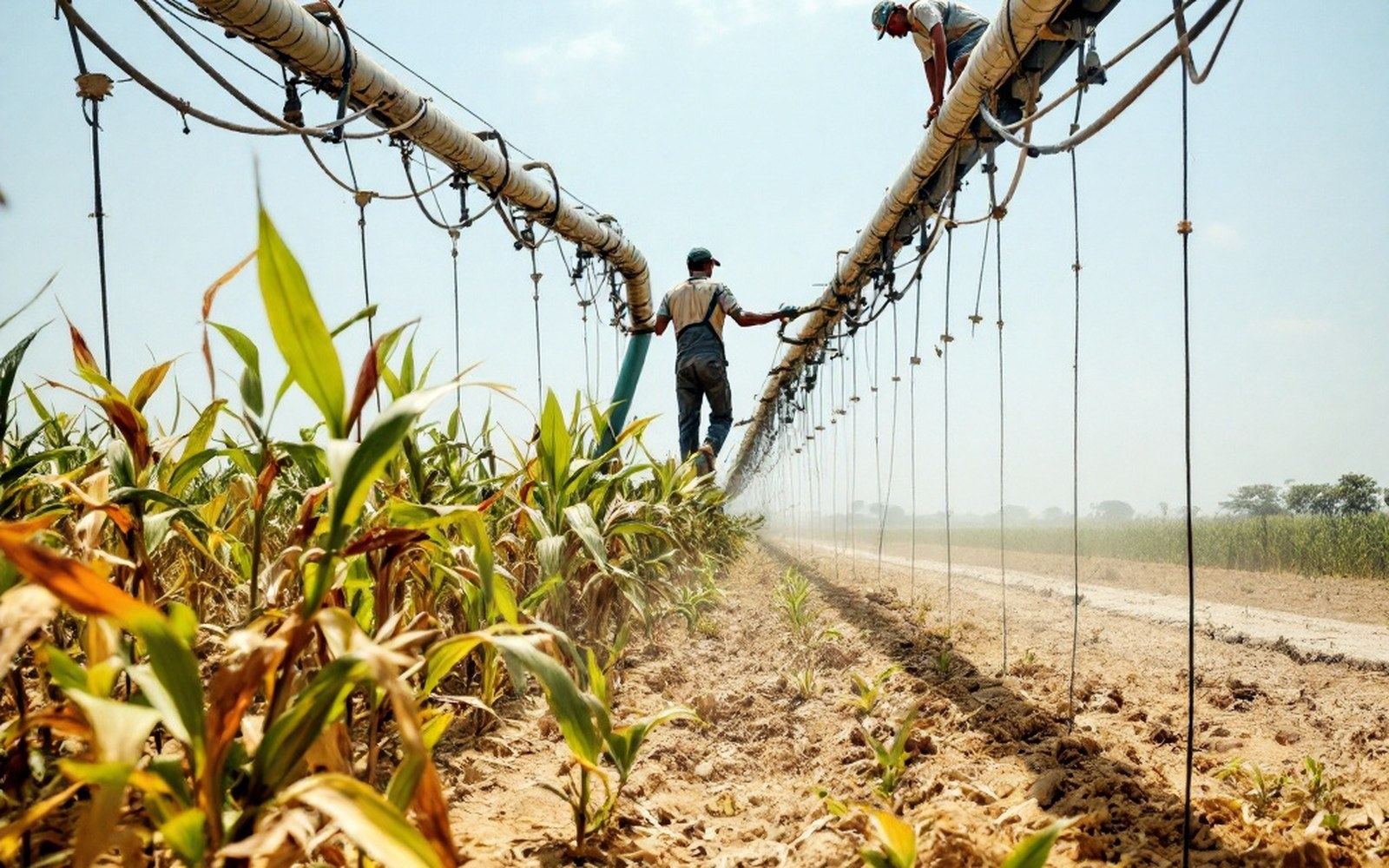
The green disc is the crop the pump can afford. The pale ground beyond it is what rain alone supports.
The crop is also a withdrawal rate
Corn is thirsty. In the High Plains, a corn field in full summer can pull more than an inch of water from the soil in a week, and where rain is short of that, the deficit comes from a well. The crop choice is therefore also a pumping rate, and the pumping rate is a statement about how long the aquifer beneath is expected to last.
The Ogallala Aquifer, the dominant formation under the High Plains from South Dakota to the Texas Panhandle, holds water that infiltrated over thousands of years. Its recharge — the rate at which precipitation filters down to replenish it — runs to fractions of an inch per year across most of its extent. Withdrawals for irrigation run to feet. That arithmetic is not a forecast; it is the present condition, documented in the United States Geological Survey's periodic water-level surveys, which show net declines across most of the aquifer's area every year that irrigation is heavy.
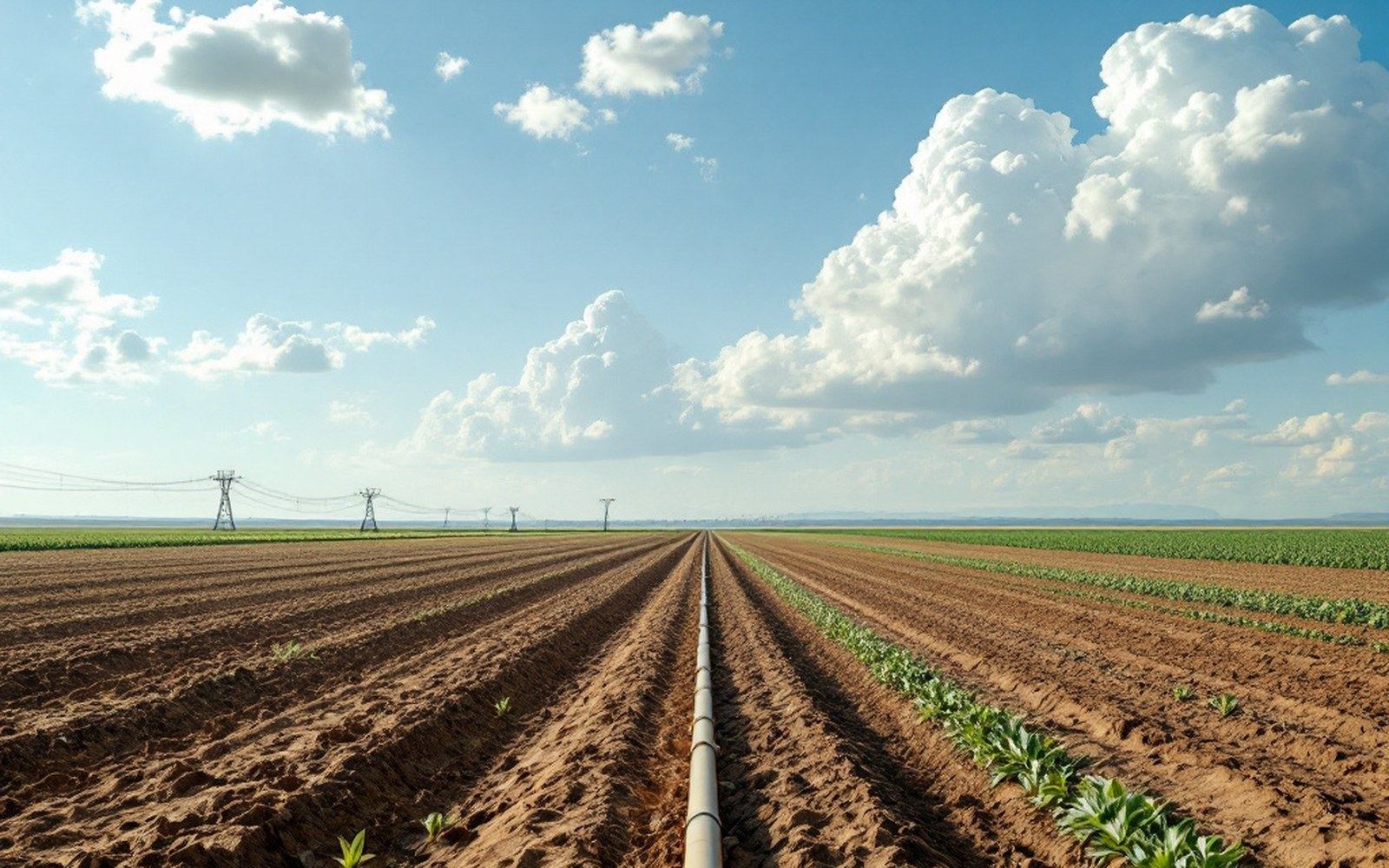
Dryland ground on the same section: lower output per acre, and no draw on the aquifer.
The saturated thickness — the vertical column of water-bearing sediment that a well can draw from — has already dropped by more than a hundred feet in parts of southwestern Kansas and the Texas High Plains. Where that column thins below roughly thirty feet, conventional turbine pumps stop lifting economically, and the land effectively retires from irrigation whether its owner intends it or not.
Corn, wheat, and the arithmetic of choosing
The cropping history of the High Plains since the 1950s is a record of steadily rising water consumption per acre, driven by the shift from dryland winter wheat — which uses only what rain provides — to irrigated corn and cotton. Corn needs roughly twenty-four inches of water through its growing season. Winter wheat, grown on rain and snow alone, survives on twelve or fewer and is harvested before the worst of the summer heat.
The expansion of center-pivot irrigation made corn viable on land that had never grown it, and the economics of corn — supported for decades by federal commodity programs and, later, by ethanol mandates — gave growers a reason to choose the water-intensive crop. The Kansas Geological Survey has tracked the resulting drawdown county by county; the pattern maps almost precisely onto the footprint of irrigated corn.
Switching back is not costless. A grower converting irrigated corn ground to dryland wheat typically sees revenue drop by more than half in a bad rain year. Where debt is secured against irrigated-land values, the collateral itself depends on the aquifer lasting. This creates a structural pressure to keep pumping even when individual operators understand the collective trajectory.
Some counties in western Kansas have formed groundwater management districts with authority to set extraction limits, and a handful of Local Enhanced Management Areas — a Kansas statutory designation — have voluntarily agreed to reduce consumptive use by defined percentages over defined periods. The reductions have been real and measurable, according to the Kansas Department of Agriculture's monitoring data, though they have not reversed drawdown, only slowed it.
The deeper economic signal is already visible in land markets. Dryland acres in the High Plains trade at a substantial discount to irrigated ground, and that gap has been widening as buyers price in declining well yields. The aquifer's remaining saturated thickness is, in this sense, already capitalized into land values — a slow, continuous revaluation as each year's USGS survey revises the numbers.
None of this settles the question of what eventually grows on land that can no longer be irrigated. Dryland sorghum and wheat can be profitable in years with adequate rainfall. Grass and rangeland can generate income through grazing. But the output per acre falls, and the population that services irrigated agriculture — the equipment dealers, the agronomists, the grain elevators — is sized for a water budget that does not exist anymore in the depleted counties.
The crop calendar and the aquifer level are the same number, expressed in different units.